
Analysts warn prolonged absence could sideline Seoul in Trump’s Indo-Pacific priorities
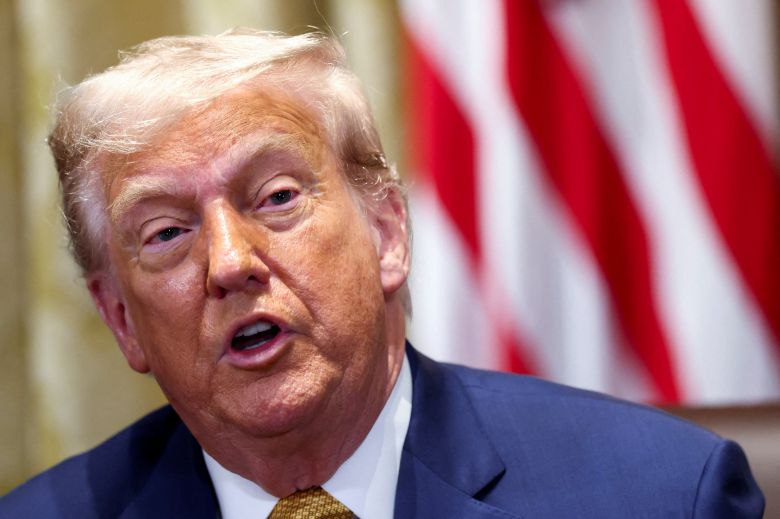 |
U.S. President Donald Trump./Reuters-Yonhap |
Six months into his second presidency, Donald Trump has yet to nominate a U.S. ambassador to South Korea, leaving the high-profile post unfilled at a time when both capitals lack senior diplomatic representation.
A South Korean government official told The Chosun Ilbo on July 16 that Washington has not even requested an agrément—the formal diplomatic approval required for an ambassadorial appointment. “It appears President Trump has not selected a candidate,” the official said.
The delay comes despite earlier speculation that former U.S. Representative Michelle Park Steel, a Korean American conservative, was under consideration. According to diplomatic sources, however, no prominent candidates are currently being vetted.
The vacuum in Seoul is all the more striking given Trump’s prompt nominations to America’s other key allies in the region. Within weeks of his November election victory, Trump tapped former Senator David Perdue to serve in Beijing and reappointed George Glass as ambassador to Japan. Both assumed their posts by May after rapid Senate confirmation. According to diplomatic observers, both men were identified as preferred candidates during the campaign.
By contrast, Seoul remains without an envoy. Acting Ambassador Joseph Yun—an Obama- and Biden-era diplomat—was installed in January as a stopgap, amid heightened uncertainty after political upheaval in South Korea. His appointment, however, was made under President Biden and has not been renewed or replaced under Trump.
The absence of confirmed ambassadors on both sides has begun to raise alarms. South Korea’s top diplomat to Washington, Cho Hyun-dong, stepped down on July 12, and President Lee Jae-myung has yet to name a successor. Meanwhile, Trump and Lee have not held a bilateral summit since either took office. The lack of senior diplomatic engagement, analysts warn, risks undermining the alliance’s operational credibility.
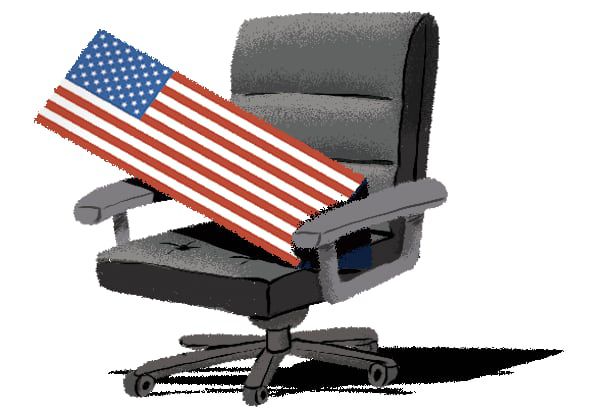 |
Illustrated by Kim Hyun-kook |
Historically, U.S. presidents have moved faster. Both the Clinton and George W. Bush administrations named ambassadors to South Korea within their first six months. Even in more recent cases of delay—such as President Joe Biden’s 13-month wait before nominating Philip Goldberg in 2022—there were clearer signals of intent. Trump, during his first term, took 16 months before nominating Harry Harris, a retired admiral.
“This kind of delay is far from ideal,” said a former South Korean ambassador to Washington. “It’s critical that the next nominee has strong political backing, and Seoul must ask whether this lag reflects broader frictions in the alliance.”
Regional comparisons are hard to ignore. Trump’s quick action on Tokyo and Beijing has raised questions in Seoul over its perceived standing. Some analysts argue that if South Korea were seen as central to Washington’s China-containment strategy, the vacancy would not have lingered.
“Elbridge Colby, a key Trump strategist, even characterizes Seoul as a country trying to ‘hedge’ between the U.S. and China,” said Park Won-gon, professor of North Korean studies at Ewha Womans University. “If South Korea doesn’t align more clearly, the administration could double down on Japan as its sole anchor in the region.”
Trump’s current envoys to China and Japan both hold hawkish views. Perdue previously voiced strong support for Taiwan’s democracy, and Glass has accused Beijing of deliberately fueling the U.S. fentanyl crisis. Steel, the former congresswoman previously floated for the Seoul post, is known for her opposition to Confucius Institutes and tough stance on China.
[Roh Suk-jo]
- Copyrights ⓒ 조선일보 & chosun.com, 무단 전재 및 재배포 금지 -
 이 기사의 카테고리는 언론사의 분류를 따릅니다.