
[Korea Financial Times, Gwak Horyung] Samsung Electronics is forecasting an unprecedented operating profit of up to KRW 150 trillion this year. Beyond simply riding the industry upturn, the company is demonstrating its determination to restore the pride of "Technology Samsung" through recovery in high bandwidth memory (HBM) technology.
DRAM Expert Jun Young-hyun's HBM4 Super-Gap Strategy
Jun Young-hyun, Vice Chairman and head of Samsung Electronics' Device Solutions (DS) Division, emphasized in his New Year's address on January 2, "HBM4 has shown differentiated competitiveness, earning acclaim from customers that 'Samsung is back,'" adding, "Let's lead the AI era together with our customers by responding to unprecedented AI semiconductor demand."
Compared to Samsung Electronics' past New Year's addresses that maintained a cautious tone, this year's message has been evaluated as presenting a management vision with considerably more aggressive and confident language. Samsung Electronics fell behind in HBM development, ceding HBM market leadership to competitor SK hynix. In October 2024, Vice Chairman Jun issued an unusual apology letter, stating, "The crisis at Samsung that many people speak of lies with us (management)," expressing determination to overcome the crisis.
DRAM Expert Jun Young-hyun's HBM4 Super-Gap Strategy
Jun Young-hyun, Vice Chairman and head of Samsung Electronics' Device Solutions (DS) Division, emphasized in his New Year's address on January 2, "HBM4 has shown differentiated competitiveness, earning acclaim from customers that 'Samsung is back,'" adding, "Let's lead the AI era together with our customers by responding to unprecedented AI semiconductor demand."
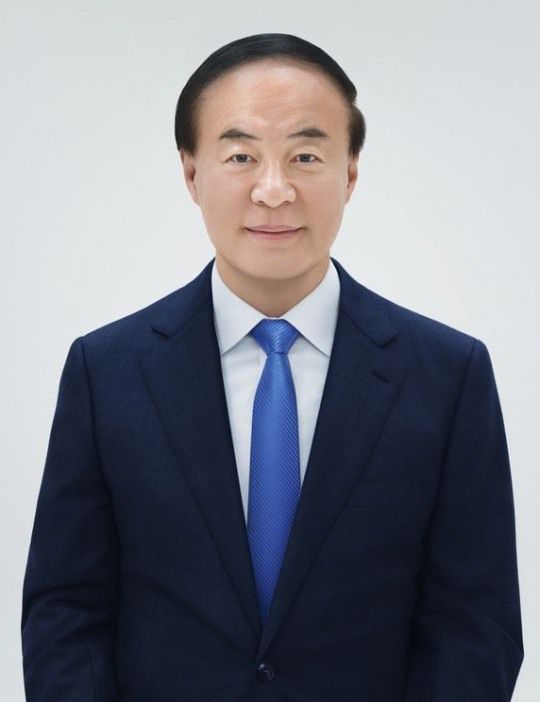 |
Jun Young-hyun, Vice Chairman and head of Samsung Electronics' Device Solutions (DS) Division |
Compared to Samsung Electronics' past New Year's addresses that maintained a cautious tone, this year's message has been evaluated as presenting a management vision with considerably more aggressive and confident language. Samsung Electronics fell behind in HBM development, ceding HBM market leadership to competitor SK hynix. In October 2024, Vice Chairman Jun issued an unusual apology letter, stating, "The crisis at Samsung that many people speak of lies with us (management)," expressing determination to overcome the crisis.
This year's New Year's address is significant in that it signaled internally and externally the company's determination to make this the first year of reclaiming leadership in AI sectors including HBM, where "Samsung's crisis" began. In the second half of last year, Samsung Electronics succeeded in supplying products to Nvidia after completing a redesign of DRAM for HBM3E. For HBM4, the company is aiming to secure "super-gap" technological competitiveness by preemptively applying 10-nanometer 1c (6th generation) DRAM, the latest process technology one step ahead of SK hynix.
Vice Chairman Jun, born in 1960, is a DRAM expert who led Samsung Electronics' semiconductor heyday in the early to mid-2010s. He effectively left the semiconductor industry when he moved to Samsung SDI in 2017. However, Vice Chairman Jun returned to Samsung Electronics as head of the DS Division, leading the semiconductor business, in 2024 after seven years away, amid persistent crisis narratives. Immediately after taking office, he ordered a complete redesign of HBM from scratch and has worked to reorganize the organization, including reviving discussion culture for "fundamental competitiveness" recovery.
Unprecedented Super Cycle... Struggling to Keep Up with Estimates
Samsung Electronics announced its spectacular comeback with operating profit of KRW 20 trillion in the fourth quarter of last year, the largest ever by a domestic company. This was due to the surge in prices of commodity DRAM, whose supply drastically decreased as memory semiconductor companies concentrated on HBM production with the full-scale arrival of the AI era.
This unprecedented memory "super cycle" is expected to intensify this year. According to market research firm TrendForce, commodity DRAM prices rose 40-50% quarter-over-quarter in the fourth quarter of 2025, and are forecast to increase an additional 55-60% in the first quarter of this year. The semiconductor super boom is also expected to extend to NAND flash, where Samsung Electronics has established an overwhelming number one position. With the expansion of the generative AI services market, demand is accelerating toward high-performance eSSD, which is advantageous for data storage.
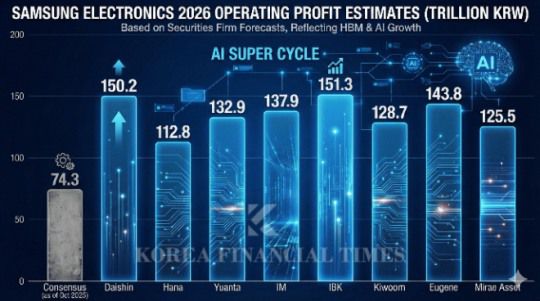 |
Chart reconstructed by Korea Financial Times via Gemini / Source: FnGuide, respective companies |
Securities firms are competing to revise upward their 2026 Samsung Electronics earnings forecasts to reflect these market changes. The average operating profit estimate for this year from securities firms that issued new corporate analysis reports after Samsung Electronics' preliminary earnings announcement on January 8 is approximately KRW 130 trillion to KRW 140 trillion. This is nearly double the estimate of KRW 74.3 trillion from three months ago.
Daishin Securities (KRW 150.2 trillion) and IBK (KRW 151.3 trillion) forecast over KRW 150 trillion. Even Hana Securities, which presented conservative figures, estimated KRW 112.8 trillion. Samsung Electronics' operating profit surpassing KRW 100 trillion this year is virtually considered a fait accompli.
These securities firms project that the DS Division will account for 85-92% of total company operating profit despite foundry losses. An industry official stated, "Although the DX Division including smartphones is expected to experience negative growth due to semiconductor supply price burdens, semiconductors will more than offset this."
HBM3E Long Run and China Market Opportunity
HBM earnings are also expected to increase significantly. With recent news that NVIDIA has postponed the mass production schedule for Rubin, which will be equipped with HBM4, to late first quarter or around second quarter of this year, HBM3E demand is expected to dominate.
Market research firms anticipate that HBM3E will account for 60-70% of HBM shipments this year. Nvidia is also expected to maintain over 50% share of products equipped with HBM3E.
This means that for Samsung Electronics, which failed to preempt the HBM3E market, a crisis could turn into an opportunity.
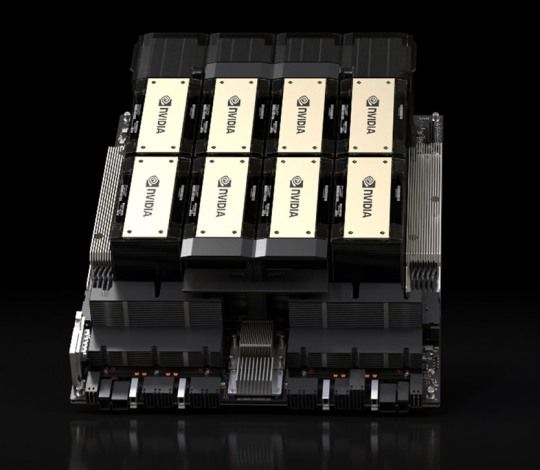 |
NVIDIA H200 |
Whether Chinese companies will purchase NVIDIA AI chips is also a variable. U.S. President Donald Trump announced in December last year that Nvidia's "H200" export to China would be conditionally allowed. The U.S. government has blocked sales of high-performance AI chips by domestic companies to contain Chinese technology. NVIDIA has also been treating China sales as "zero" in its earnings guidance.
The H200 is a Hopper architecture-based product equipped with HBM3E. It is a previous generation lineup before Blackwell and Rubin.
However, as both U.S. and Chinese governments maintain sensitive positions regarding China volumes, the actual business scale remains uncertain.
Following news of China export approval, NVIDIA CEO Jensen Huang stated at CES 2026 in early January that "(Chinese) customer demand is very high" and "H200s are pouring out of production lines." Foreign media estimate that Nvidia has received orders for over 2 million H200 units from Chinese companies through this year.
Gwak Horyung (horr@fntimes.com)
데일리 금융경제뉴스 FNTIMES - 저작권법에 의거 상업적 목적의 무단 전재, 복사, 배포 금지
Copyright ⓒ 한국금융신문 & FNTIMES.com
 이 기사의 카테고리는 언론사의 분류를 따릅니다.