
Stalled domestic demand and tariffs push Korean automakers to tap underused Chinese capacity
Hyundai Motor and Kia have quintupled vehicle exports from their Chinese factories over the past two years, as the South Korean automakers shift underutilized capacity in the world’s largest auto market into export-focused production hubs.
According to Hyundai Motor Group, exports from its Chinese plants reached 118,000 units in the first half of 2025—making China the group’s third-largest overseas export base after Turkey and India. That figure is up from 64,000 units in 2024 and just 23,000 in 2023, underscoring a sharp rebound in output from facilities long seen as a drag on the group’s global footprint.
Hyundai’s share of that total rose from 10,000 vehicles last year to 35,000 in the first half of 2025. The Elantra sedan was the top export, with roughly 19,000 units shipped primarily to Middle Eastern markets such as Saudi Arabia. Another 10,000 units were Sonata taxis exported to South Korea—marking the company’s first domestic sales of China-made vehicles.
According to Hyundai Motor Group, exports from its Chinese plants reached 118,000 units in the first half of 2025—making China the group’s third-largest overseas export base after Turkey and India. That figure is up from 64,000 units in 2024 and just 23,000 in 2023, underscoring a sharp rebound in output from facilities long seen as a drag on the group’s global footprint.
Hyundai’s share of that total rose from 10,000 vehicles last year to 35,000 in the first half of 2025. The Elantra sedan was the top export, with roughly 19,000 units shipped primarily to Middle Eastern markets such as Saudi Arabia. Another 10,000 units were Sonata taxis exported to South Korea—marking the company’s first domestic sales of China-made vehicles.
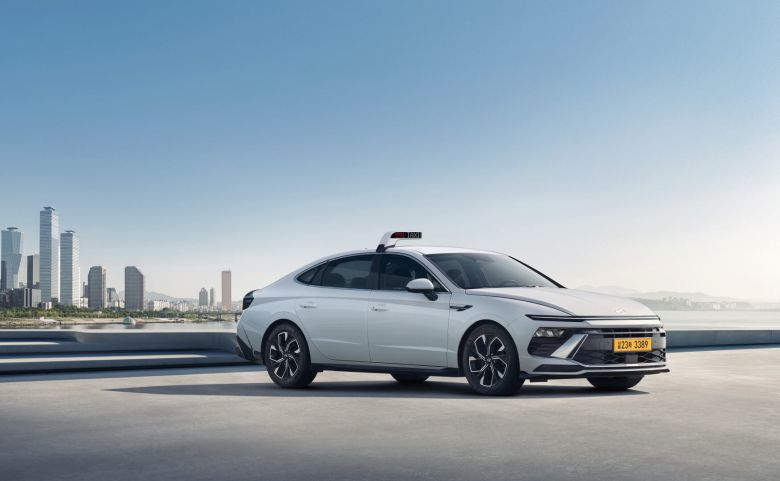 |
Hyundai Sonata taxi./Hyundai Motor Group |
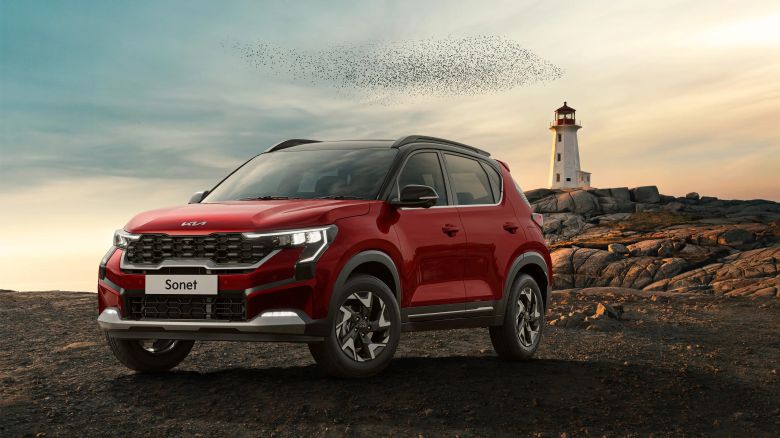 |
Kia Sonet./Hyundai Motor Group |
“The turning point came in the second half of last year with Elantra exports,” a Hyundai spokesperson said. “Now, the Middle East and ASEAN are key markets.”
Kia also ramped up exports from its Chinese facilities, shipping 83,000 units in the first half—up sharply from 23,000 units in 2023. Its bestselling export model was the Sonet, a compact SUV, with 20,000 units sold across Latin America and the Middle East.
Historically, Hyundai and Kia have invested in emerging markets such as Indonesia and Brazil to support export demand. But a Hyundai official acknowledged that local consumption in these markets has been slower to develop than anticipated. At the same time, intensifying trade tensions—particularly U.S. tariffs that have curtailed shipments from Hyundai’s Mexican plant—have made supply chain planning increasingly complex.
By contrast, China offers relatively low labor costs and well-developed production infrastructure, making it an increasingly attractive export platform. That shift has bolstered the strategic value of the companies’ remaining Chinese facilities, which had endured years of downsizing and weak utilization.
Hyundai Motor Group once operated eight plants in China—five under Hyundai and three under Kia—but following a series of divestments and shutdowns, only two plants from each brand remain operational. The group’s total production capacity has fallen from 2.7 million to roughly 1.5 million units. Output in 2024 stood at around 400,000 units, leaving capacity utilization at just 30 percent.
The pivot to exports is already improving financial performance. Beijing Hyundai, Hyundai’s Chinese joint venture, narrowed its first-quarter operating loss to 42.3 billion won from 146 billion won a year earlier. Kia’s joint venture Yueda Kia returned to profitability in 2024 for the first time in eight years, and recorded 52.2 billion won in operating profit in the first quarter of 2025.
With exports helping to stabilize operations, Hyundai Motor Group is also renewing its push into China’s electric vehicle market, where its share has fallen below 1% from a peak of more than 10%. The company plans to launch its first EV in China later this year, followed by five eco-friendly models—including hybrids—by 2026.
Executives now argue that even modest market share gains in China could be more cost-effective than new factory investments in slower-growing third markets. For Hyundai and Kia, reclaiming just one percentage point in China may deliver greater value than greenfield expansion elsewhere.
[Lee Young-kwan]
- Copyrights ⓒ 조선일보 & chosun.com, 무단 전재 및 재배포 금지 -
 이 기사의 카테고리는 언론사의 분류를 따릅니다.