
 |
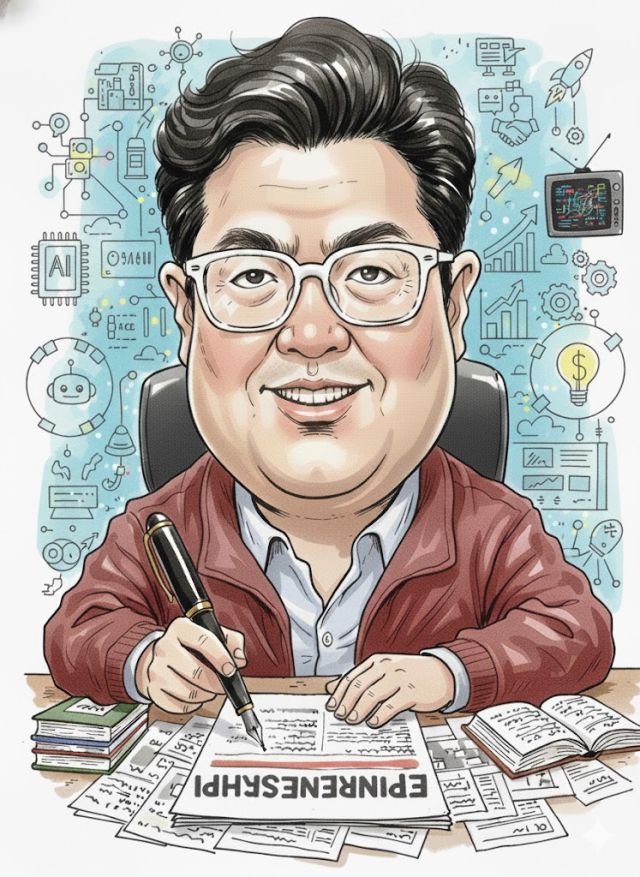
Graphics created by ChatGPT |
But in this era of relentless innovation, the decisive factor is no longer the technology itself. AI is becoming widely accessible—almost a public good. What will truly separate winners from laggards is the ability to turn that technology into new business models, new industries, and new value. In other words, the entrepreneurial spirit.
Entrepreneurship is often reduced to the romantic image of a lone founder with a great idea. But the Global Entrepreneurship Monitor defines it differently: as a behavioral capacity that combines opportunity recognition, risk-taking, innovativeness, and the power to execute. It is the ability to see what others overlook, accept that failure is part of progress, and move boldly when uncertainty is high.
My own research across 16 metropolitan regions confirms this. Regions that scored higher in opportunity perception, risk tolerance, self-belief, and innovativeness did not simply produce more startups. They produced more economic growth. What mattered was not the rate of new business creation, but the mindset that turns ideas into impact. Growth, in other words, was driven less by technology and capital than by human intention and action.
This is why the real battleground of the AI race will not be technical capability alone. The differentiator will be entrepreneurial leadership powerful enough to reshape markets using the tools of AI.
OpenAI is a case in point. The company did not win global attention merely because it built a sophisticated model. It reoriented the investment landscape, reorganized industrial ecosystems, and triggered a rethinking of how economies will function in an AI-first era. “Technology + capital + execution” is the formula that defined its rise. That is entrepreneurship in its purest form.
Countries and companies hoping to lead the AI era need to understand this shift.
Investing in AI research is necessary, but insufficient.
Without systems that reward risk-taking, channels that move ideas from laboratory benches into commercial use, and a culture that respects and protects innovators, AI spending becomes little more than a pile of capital stacked on fragile ground.
Only with such foundations, AI becomes transformative—not only advancing technology, but accelerating national competitiveness. AI is sweeping the world with the force of a storm.
Yet its direction will not be dictated by algorithms or machines. It will be shaped by the people daring enough to wield them. In the AI age, advantage will not belong to those who merely possess technology. It will belong to those who spot the opening first—and seize it.
The author is a columnist of Aju Media Corporation.
Wonsang Gi 편집국장 wsgi@ajunews.com
- Copyright ⓒ [아주경제 ajunews.com] 무단전재 배포금지 -
 이 기사의 카테고리는 언론사의 분류를 따릅니다.