
 |
Graphics by AJP Song Ji-yoon |
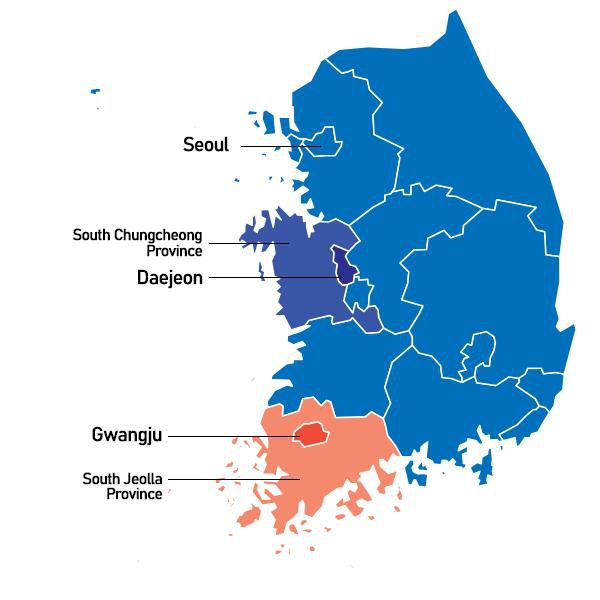
More than 51 percent of South Korea’s 51.6 million people live in and around Seoul, an area that covers just 12 percent of national land. The concentration is extreme by international standards. Only 7.5 percent of Germany’s population lives around Berlin, 15.9 percent around Rome and 17.4 percent around Madrid. Even in countries known for dominant capitals, the share is far lower: 24.5 percent around Paris, 24.8 percent around London and 34.4 percent around Tokyo. In Korea, this imbalance has reinforced itself as young people leave regional cities for education and work in Seoul, accelerating decline elsewhere.
What once fueled growth has now become a structural constraint. South Korea is entering a period of rapid population decline and aging faster than any other major economy. In that context, concentrating people and opportunity in one metropolitan area is no longer efficient. Seoul faces chronic shortages of housing and jobs, while large parts of the country are losing the scale needed to sustain industries, public services and local investment. Policymakers warn that without structural change, the capital will continue to swell even as regional Korea hollows out.
Rather than trying to push people out of Seoul, the government is pursuing a different strategy: building regional cities large enough to function as real alternatives.
The Lee Jae Myung administration is promoting administrative integration, merging neighboring cities and provinces to create larger metropolitan governments with greater fiscal capacity and policy authority.
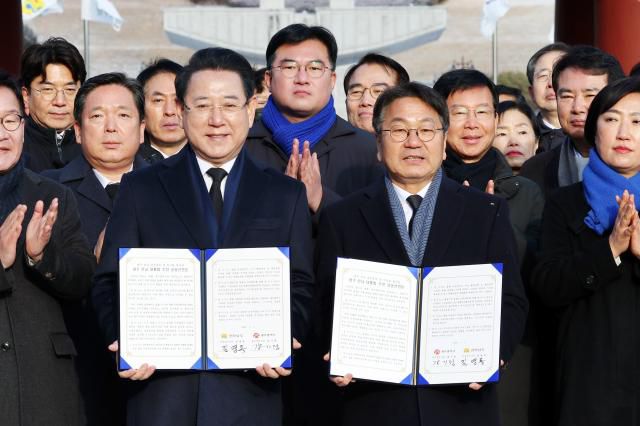 |
Gwangju Mayor Kang Gi-jung and South Jeolla Province Governor Kim Yung-rok pose for a commemorative photo after announcing the Gwangju–South Jeolla administrative integration declaration at the May 18th National Cemetery in Buk-gu, Gwangju, on Jan. 2, 2026. Yonhap |
The approach is beginning to take shape. In December 2025, Daejeon Metropolitan City and South Chungcheong Province declared their intent to integrate administratively. In January, Gwangju and South Jeolla Province followed, aiming to elect unified leadership in the June local elections. If completed, the new metropolitan governments would have populations of 3.6 million and 3.2 million, respectively — comparable to Busan and Incheon, the country’s second- and third-largest cities.
To support the transition, the central government has pledged up to 5 trillion won per year for each integrated region, with total support reaching 20 trillion won over four years.
Kim said the government would move quickly to institutionalize support, announcing plans to form a joint task force with relevant ministries to finalize financial and administrative measures and work closely with the National Assembly. A dedicated support committee under the Prime Minister’s Office will also be established to ensure continuity beyond the initial merger phase, officials said.
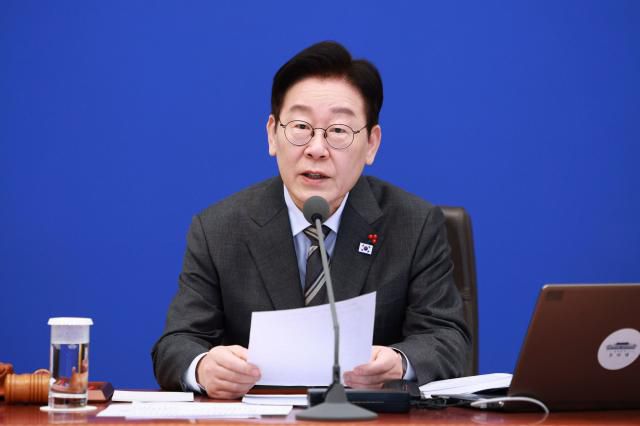 |
President Lee Jae Myung has emphasized policies to prevent the disappearance of local communities and promote the development of non-capital regions since his presidential campaign days. Yonhap |
Larger metropolitan units, officials argue, can pool budgets, coordinate development and create labor markets deep enough to compete with Seoul.
The aim is to slow youth migration to the capital, ease pressure on its housing and transport systems, and concentrate remaining growth in a limited number of viable regional hubs as the population shrinks.
Experts broadly support the direction but caution that process will determine outcomes.
Professor Park Jin-sol of Inha University warned that administrative integration must not be rushed. “If integration proceeds in haste, it may be driven by the central government without sufficient collection of residents’ opinions,” she said, adding that it is more important to ensure resident participation and deliberation than to focus on speed.
Past experience underscores the risk. The Cheongju–Cheongwon merger followed more than two decades of consultation and a local referendum and later showed gains in administrative efficiency. By contrast, the Changwon–Masan–Jinhae merger, completed without a referendum, has faced persistent disputes over governance and local marginalization. The difference, Park noted, lay not in policy design but in legitimacy.
Lawmakers from both ruling and opposition parties have voiced support for integration while echoing the need for public consent.
Democratic Party lawmaker Chae Hyun-il said integration is necessary to strengthen regional competitiveness but stressed that it must “lead to future-oriented development and real improvements in quality of life.”
People Power Party lawmaker Koh Dong-jin also backed the policy, emphasizing that “legitimacy must be secured through the collection of residents’ opinions.”
At the same time, criticism has emerged over the scale of government funding. Another ruling party lawmaker, Lee Chul-gyu, questioned whether heavy financial incentives risk distorting priorities. “National finances are limited,” he said, arguing that integration should focus on efficiency rather than what he called a “money-driven approach.”
Despite debate over funding levels and timing, there is broad agreement across party lines that Seoul’s dominance has become a national constraint rather than a source of strength. As the capital grows ever more crowded and regional Korea continues to hollow out, administrative integration represents a high-stakes attempt to rebalance a shrinking country.
Lee Jung-woo Reporter cannes2030@ajupress.com
- Copyright ⓒ [아주경제 ajunews.com] 무단전재 배포금지 -
 이 기사의 카테고리는 언론사의 분류를 따릅니다.