
유엔이 기후위기 대응과 탄소 감축을 지속가능발전의 핵심 목표로 설정하면서, 기후테크(Climate Tech)가 정책과 산업 전반에서 중요한 축으로 부상하고 있다. 기후테크는 온실가스와 오염물질 배출을 줄여 기후위기에 대응하는 기술로, 지구촌 곳곳의 가뭄, 홍수, 빙하 붕괴, 해수면 상승 등 재난이 심각해짐에 따라 주목받고 있다. 특히 기후변화에 따른 태평양 도서국들의 국가적 위기 상황은 기후테크의 필요성을 각인시키고 있다.
지구를 살리자는 글로벌 캠페인이 확산되면서, 기후테크는 금세기의 가장 중요한 기술로 부상했으며, 국내 기업들도 이제 기술개발과 상용화의 성장단계로 진입하고 있다. 이에 따라 각 기업의 전략, 실적, 향후 목표 등을 살펴보는 시리즈가 이어질 예정이다. 이 전환기적 시점에서 기후테크는 환경보호와 함께 새로운 산업적 기회와 신성장 동력으로 자리잡고 있다. (편집자 주)
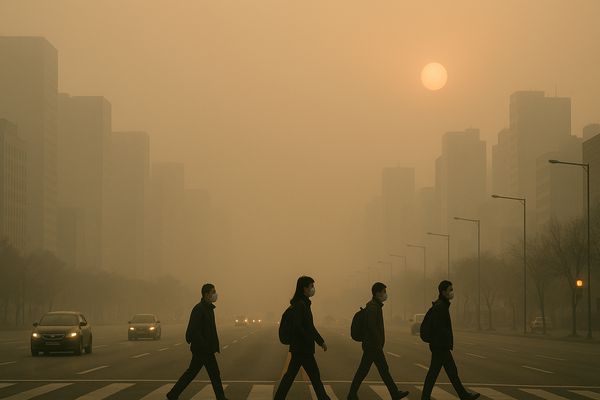
[SDG13 기후위기 대응] 전 세계 도시에서 공기질 악화가 보건·경제 리스크로 부상하면서, 더 촘촘하고 저비용인 모니터링 인프라에 대한 수요가 커지고 있다. WHO는 대기오염이 매년 약 700만 명의 "기 사망과 연관된다고 추정하며, 각국은 고밀도 센서 네트워크 등 디지털 수단을 통해 관측 격자를 촘촘히 하려는 시도를 확대하고 있다.
지구를 살리자는 글로벌 캠페인이 확산되면서, 기후테크는 금세기의 가장 중요한 기술로 부상했으며, 국내 기업들도 이제 기술개발과 상용화의 성장단계로 진입하고 있다. 이에 따라 각 기업의 전략, 실적, 향후 목표 등을 살펴보는 시리즈가 이어질 예정이다. 이 전환기적 시점에서 기후테크는 환경보호와 함께 새로운 산업적 기회와 신성장 동력으로 자리잡고 있다. (편집자 주)
 |
(사진=AI 생성, SDG뉴스) |
 |
[SDG13 기후위기 대응] 전 세계 도시에서 공기질 악화가 보건·경제 리스크로 부상하면서, 더 촘촘하고 저비용인 모니터링 인프라에 대한 수요가 커지고 있다. WHO는 대기오염이 매년 약 700만 명의 "기 사망과 연관된다고 추정하며, 각국은 고밀도 센서 네트워크 등 디지털 수단을 통해 관측 격자를 촘촘히 하려는 시도를 확대하고 있다.
최근에는 영상·스트리밍 등 비정형 데이터를 활용해 오염도를 추정하는 연구·적용도 나타나고 있어, 도시 현장에서 공간해상도를 높이는 보완재로 주목받는다.
이 흐름 속에서 국내 스타트업 '딥비전스(DeepVisions)'는 영상 데이터와 미세먼지 데이터를 매칭한 딥러닝 모델로 카메라 영상만으로 실시간 미세먼지 농도를 추정하는 비전 AI 기술을 개발·운영하고 있다. 회사는 CCTV·모바일 카메라 등 기존 영상 인프라를 활용하는 소프트웨어 중심 접근을 내세우며, 서비스·브랜드로 '미세찰칵', '에어체커' 등을 소개한다. 또한 고용노동부 지정 예비사회적기업으로서, 도시·시설의 공기질 관리에 적용 가능한 영상 기반 환경 모니터링 솔루션을 표방한다.
◆ 컴퓨터 비전 기술
컴퓨터 비전(Computer Vision)은 영상 자료에서 정보를 추출하고 분석하는 기술이다. 최근들어 이 기술은 인공지능과 머신러닝 기술이 접목돼 인간의 시각 능력과 거의 동일한 수준의 인지·정보분석 능력을 갖췄다. 2023년 컴퓨터 비전 기술 시장규모는 22" 원에 달했고, 매년 20% 이상 성장하고 있다.
'딥비전스'는 세계 최초로 디지털 영상 데이터를 기반으로 미세먼지 농도를 측정하는 기술을 개발했다. 영상 데이터와 미세먼지 데이터를 매칭하는 딥러닝 학습모델을 구축, 영상 데이터로 실시간 미세먼지 농도를 측정하는 시스템이다. 측정된 농도는 온라인과 모바일 형태로 제공되며, 미세먼지 지도로도 만들어진다. 고가의 측정기를 추가 설치할 필요없이 기존 카메라 인프라를 활용할 수 있어 비용절감에도 효과적이다.
최근 미세먼지 측정 기술은 다양한 분야에 활용 가능하다. 건설현장의 경우, 현재 사용 중인 광산란 미세먼지 측정기로는 입자가 큰 비산먼지를 측정하지 못한다는 문제점이 있다. 따라서 비산먼지를 효과적으로 관리하기 위해서는 발생량을 시각적으로 확인할 수 있어야 하는데, 이때 '딥비전스'의 측정 솔루션을 활용하면 효과적인 대응을 기대할 수 있다.
한편, '딥비전스'는 지난해 미국 라스베거스에서 열린 CES 2024에서 혁신상을 수상한 바 있다.
SDG뉴스 함지원 기자
[Geo-Tech Spotlight] #105
"DeepVisions" Measures Fine-Dust Concentrations from Video Alone, in Real Time
Deep-learning models fuse video streams with particulate-matter data to deliver real-time concentrationsapplicable to city and facility management
As the United Nations elevates climate-change mitigation and carbon reduction to the core of its Sustainable Development Goals, climate techtechnologies that curb greenhouse-gas and pollutant emissionshas become a central pillar of policy and industry alike. With droughts, floods, glacial collapse and sea-level rise intensifying around the globe, these innovations are drawing heightened attention. In particular, the national-level crises confronting Pacific island states underscore the indispensability of climate tech.
Galvanized by global campaigns to "save the planet," climate tech has risen to prominence as one of the century's most consequential technological arenas, and Korean companies are now entering the growth phase of development and commercialization. This series examines each firm's strategy, performance and future goals. At this transitional juncture, climate tech is positioning itself not only as environmental protection but also as a new industrial opportunity and growth engine. (Editor's note)
|
(사진=AI 생성, SDG뉴스) |
|
As deteriorating urban air quality emerges as both a public-health and economic risk, demand is rising for denser, lower-cost monitoring infrastructure. The WHO estimates that air pollution is associated with roughly seven million premature deaths annually, and governments are expanding digital approachessuch as high-density sensor networksto densify observation grids. More recently, research and deployments that infer pollution using unstructured data (video, streaming) have appeared, drawing attention as a complementary means of improving spatial resolution in the urban field.
Within this trend, Korean start-up DeepVisions has developed and operates a vision-AI system that estimates fine-dust concentrations in real time from camera footage alone, training deep-learning models that map video inputs to particulate-matter measurements. The company emphasizes a software-first approach that leverages existing video infrastructureCCTV and mobile camerasand offers services/brands such as "MiseChalkak" and "AirChecker." Designated by the Ministry of Employment and Labor as a preliminary social enterprise, DeepVisions positions its video-based environmental-monitoring solution for use in urban and facility air-quality management.
◆ Computer Vision Technology
Computer vision extracts and analyzes information from imagery. Coupled with artificial intelligence and machine learning, it now approaches human-level perception and analytic capability. In 2023, the computer-vision market reached approximately KRW 22 trillion and has been growing above 20% annually.
DeepVisions reports the world's first technology to quantify fine-dust concentrations based on digital video data. Its deep-learning model pairs video with particulate-matter readings to produce real-time concentration estimates delivered via web and mobile, and rendered as fine-dust maps. Because it utilizes existing camera infrastructure, the system avoids the need to install additional high-cost instruments, yielding meaningful cost savings.
The technology has broad applicability. On construction sites, for example, commonly used light-scattering PM sensors struggle to capture coarse fugitive dust. Effective management requires visual confirmation of emission volumes; here, DeepVisions' video-based measurement provides a practical tool for timely response.
DeepVisions also received a CES 2024 Innovation Award last year in Las Vegas.
Reported by Ham Ji-won, SDG News
< Copyright SDG뉴스 >
 이 기사의 카테고리는 언론사의 분류를 따릅니다.